


Why does my dog get muscle cramps? Most muscle cramps in dogs happen because of overexertion, dehydration, or an electrolyte imbalance, especially low magnesium. Magnesium is essential for muscles to contract and relax properly, so when levels run low, muscles can seize, twitch, or spasm, most often in the legs and back after exercise, in cold weather, or overnight.
If you've watched your dog's leg suddenly lock up mid-walk or twitch while they're resting, you know how alarming it can look. The good news: for most dogs, occasional cramping is manageable, and it often points to something you can support directly through hydration and daily mineral intake.
That's where ReMag comes in: a highly absorbable liquid magnesium supplement built to support healthy muscle contraction and relaxation, so cramps and spasms are less likely to take hold in the first place.
Why Do Dogs Get Muscle Cramps?
A muscle cramp happens when a muscle contracts involuntarily and won't release. In dogs, this shows up as a sudden tightening, twitching, or a leg that briefly "locks" before relaxing again. It can happen mid-run, after a long hike, or seemingly out of nowhere while your dog is curled up asleep.
Cramping is usually your dog's muscles signaling that something is out of balance, whether that's fluid levels, minerals, temperature, or simple fatigue. Understanding which imbalance is behind it is the first step to helping your dog feel more comfortable.
Common Causes of Muscle Cramps in Dogs
Overexertion and Fatigue
Long walks, intense play, or a weekend hike can tire muscles out faster than they can recover, leading to twitching or cramping, especially in active or overweight dogs.
Dehydration and Heat
Fluid loss from heat, exercise, or simply not drinking enough throws off the balance muscles need to contract and release smoothly, making cramps more likely on warm days.
Low Magnesium or Electrolytes
Magnesium, calcium, and potassium all play a role in muscle contraction. A dip in any of these, common in dogs with GI issues or aging bodies, can trigger cramps and spasms.
Cold Weather and Stiffness
Cold muscles are tighter, less flexible muscles. Older dogs and short-haired breeds are especially prone to cramping after time outside in chilly temperatures.
Underlying Joint or Nerve Issues
Conditions like arthritis, hip dysplasia, a pinched nerve, or a slipped disc can cause muscles to compensate and cramp. Frequent or worsening cramps deserve a vet visit to rule these out.
Muscle Cramp, Spasm, or Seizure? How to Tell the Difference
The biggest difference is consciousness. During a muscle cramp or spasm, your dog stays alert, aware, and responsive, and the tightening is usually localized to one leg or area. During a seizure, a dog typically loses awareness, may lose bladder or bowel control, and the whole body is affected, not just one limb. If you're ever unsure which one you're seeing, it's worth a call to your vet.
How ReMag Supports Healthy Muscle Function
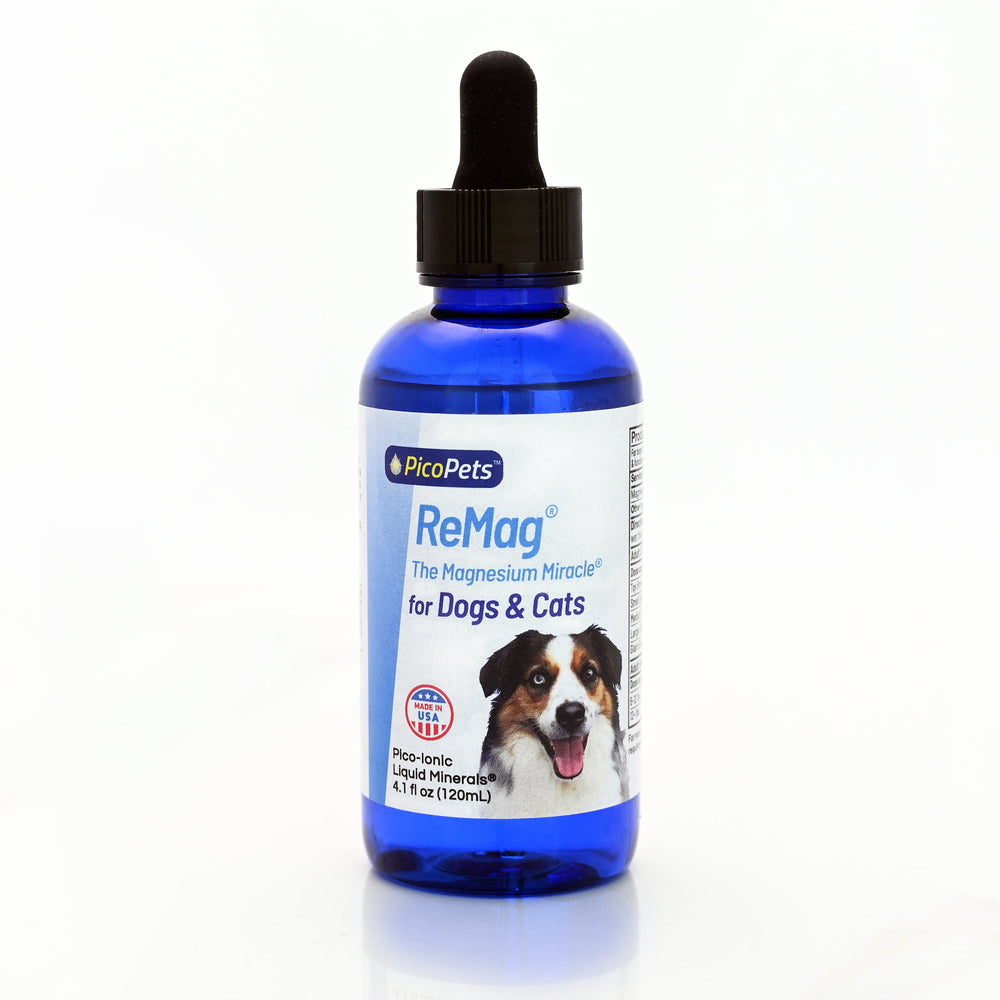
ReMag is PicoPets'® pico-ionic liquid magnesium supplement, formulated to give dogs and cats a highly absorbable source of the mineral their muscles rely on most. Magnesium is required for muscles to both contract and relax, which is exactly why low levels are so closely linked to cramps, spasms, and twitching.
Because ReMag is broken down to a pico-ionic size, it's easily absorbed and gentle on digestion, so it goes to work supporting your dog's muscles, hydration, and nervous system without the digestive upset some magnesium forms can cause. Just add drops to your dog's water bowl or food, once a day.
What Daily Magnesium Support Can Do
Muscle Contraction and Relaxation
ReMag helps supply the magnesium muscles need to contract and release smoothly, supporting fewer cramps, spasms, and twitches during and after activity.
Hydration and Electrolyte Balance
As a key electrolyte, magnesium helps cells hold onto fluid efficiently, supporting the hydration your dog's muscles need to keep working properly.
Energy and Recovery
Magnesium fuels ATP production, the energy your dog's muscles run on, supporting quicker recovery after exercise and less next-day fatigue or stiffness.
A Calm, Balanced Nervous System
Magnesium supports healthy nerve signaling, helping ease the overstimulation that can contribute to muscle tension, restlessness, and cramping.
Who Benefits Most From Magnesium Support?
Any dog can benefit from consistent magnesium intake, but a few groups tend to notice it most: active and working dogs who put in serious miles, senior dogs who are more prone to stiffness and cramping, dogs recovering from exercise or injury, and dogs who already run low on electrolytes due to heat, travel, or GI sensitivity.
Cramping isn't just an "active dog" problem. Senior dogs, dogs with sensitive stomachs, and dogs who don't drink enough water are all more likely to run low on magnesium, making daily support useful well beyond the trail or dog park.
How to Use ReMag
ReMag is given daily, easily added to your dog's water bowl or food. Dosing is based on your dog's weight, measured in drops:
| Breed Size | Weight | Daily Dose |
|---|---|---|
| Toy Breed | 2–10 lbs. | 1–4 drops |
| Small Breed | 11–29 lbs. | 5–10 drops |
| Medium Breed | 30–49 lbs. | 11–15 drops |
| Large Breed | 50–79 lbs. | 16–20 drops |
| Giant Breed | 80+ lbs. | 21–28 drops |
ReMag also comes in a dosage for cats. See full dosing details here.
When to Call the Vet About Dog Muscle Cramps
Occasional, brief cramping after exercise usually isn't an emergency. But call your vet if cramps are frequent, worsening, or paired with other symptoms, such as fever, vomiting, loss of appetite, difficulty breathing, disorientation, or any loss of consciousness. These can signal something beyond a simple cramp, and your vet can help rule out injury, arthritis, kidney issues, or a neurological cause.
A Simple Daily Habit for Fewer Cramps
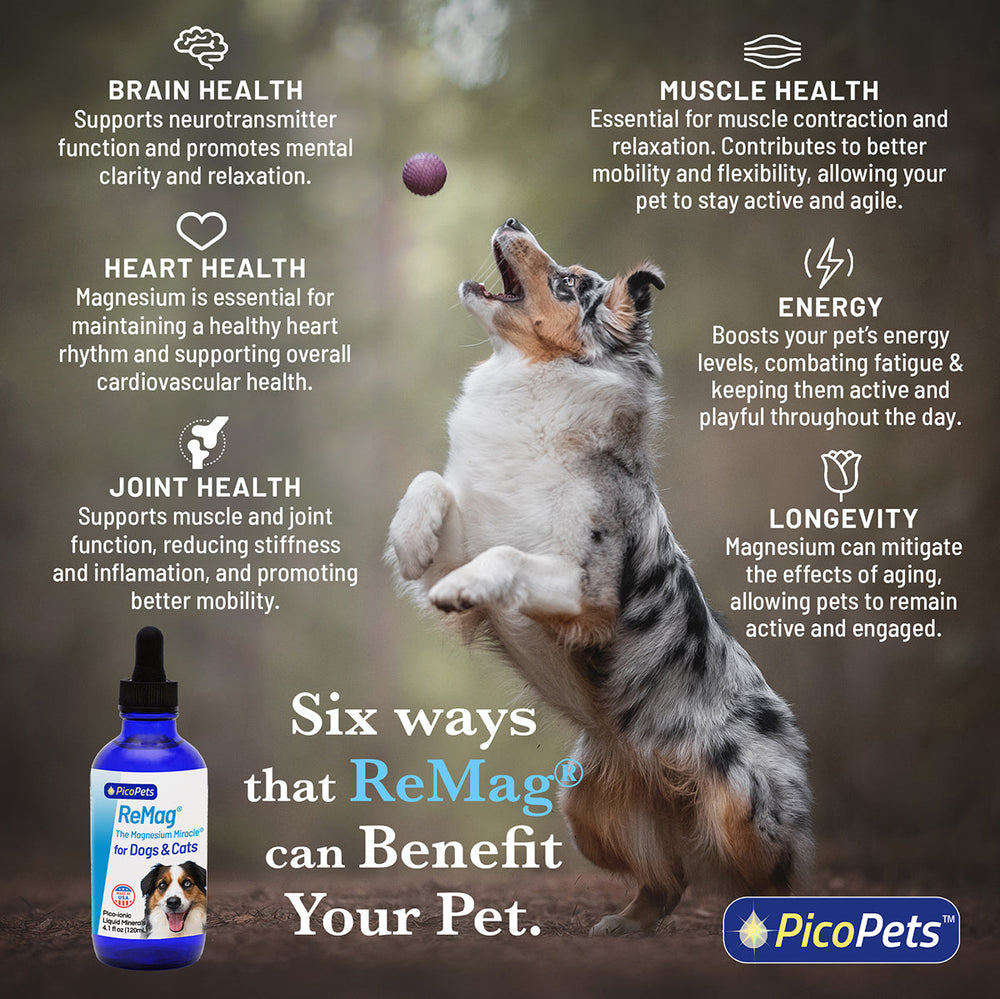
You can't always prevent a muscle cramp, but you can stack the odds in your dog's favor: keep them hydrated, let them warm up before hard exercise, and make sure their daily mineral intake, especially magnesium, is where it needs to be.
ReMag was built to make that last part effortless: a few drops in the water bowl, once a day, for muscles that contract, relax, and recover the way they're supposed to.
Frequently Asked Questions
Why does my dog get muscle cramps?
Most dog muscle cramps come from overexertion, dehydration, or an electrolyte imbalance, particularly low magnesium. Magnesium is required for muscles to both contract and relax, so a shortfall can lead to twitching, spasms, or a leg that briefly locks up.
How can I tell if my dog is cramping or having a seizure?
During a cramp or spasm, your dog stays conscious, alert, and responsive, and the tightening is usually limited to one leg or muscle group. A seizure typically involves loss of awareness, whole-body involvement, and sometimes loss of bladder or bowel control. When in doubt, contact your vet.
Can dehydration cause muscle cramps in dogs?
Yes. Fluid loss disrupts the electrolyte balance muscles need to contract and release properly, which is why cramping is more common after exercise, on hot days, or in dogs who don't drink enough water throughout the day.
Does magnesium help with dog muscle cramps?
Magnesium plays a direct role in muscle contraction and relaxation, so supporting healthy magnesium levels, through a highly absorbable option like ReMag, can help reduce the frequency of cramps, spasms, and twitching over time.
What should I do if my dog's leg cramps up?
Let your dog stop and rest, gently massage or stretch the affected leg if they'll allow it, offer water, and keep them warm. If cramping is severe, doesn't ease up, or happens repeatedly, check in with your vet.
When should I worry about my dog's muscle cramps?
Occasional, brief cramps after activity are usually not a concern. Frequent or worsening cramps, or cramps paired with fever, vomiting, disorientation, or loss of consciousness, warrant a veterinary visit to rule out an underlying condition.
Give Your Dog's Muscles the Support They Need
A few drops of ReMag a day helps support healthy muscle contraction, relaxation, and recovery, so cramps are less likely to slow your dog down.
Partner with PicoPets®!
Love advocating for pets? We're looking for individuals, organizations, retailers, and pet experts who want to help the health and wellness of dogs and cats through the PicoPets® formulas. See how you can partner with us by clicking the button below!
Related Posts
The Role of Magnesium in Dogs' Health
Why Your Dog or Cat Needs Electrolytes
Heat Stroke in Dogs: Signs, Prevention, and What You Should Know


